
Last updated on March 10th, 2025
Sometimes, older adults seem to have better social lives than people in their early 20s. But why? What makes finding connections easier in your later years compared to what many consider their social prime?
Socioemotional Selectivity Theory (SST) explains this as follows: ” Individuals seek social partners consistent with their broader goals, and the goals of older adults are focused on optimizing emotional well-being.”
In short, as we get older, we may become pickier about whom we spend our time with, focusing on relationships that make us truly happy. You’ve probably noticed this in your community during events like fitness classes, group games, or movie nights, especially with residents who are settling into life in a group setting. However, dining is really where this focus on socioemotional well-being shows up.
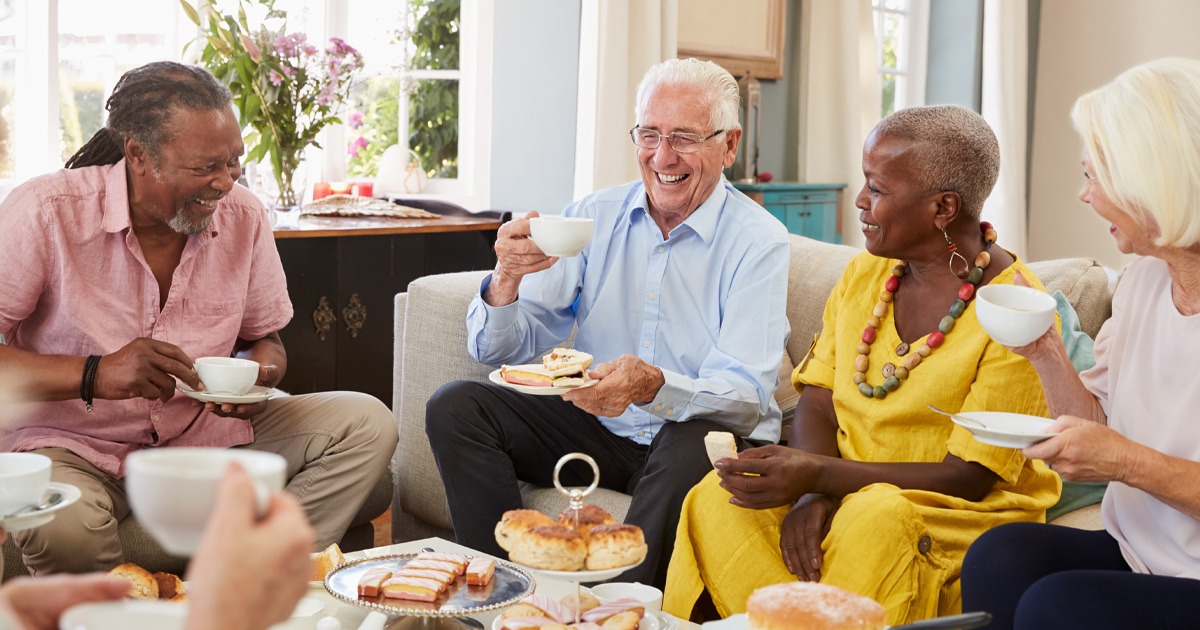
Senior living communities are places where older adults can comfortably and enjoyably spend their retirement years. The more social opportunities your community offers, especially in the dining room, the happier they will be.
5 Reasons to Encourage Socializing in Senior Dining
Let’s look at five reasons why you should encourage social dining in your senior living community.
1. It boosts mental health.
As we age, the risk of developing more severe chronic physical and mental health problems increases. The mental and cognitive health needs of older adults living in residential care are unique, with depression and anxiety being some of the most commonly reported issues. While older adults tend to be more resilient and possess more wisdom than younger adults, they still struggle with mental health problems. If not addressed, these can lead to more severe health problems (including malnutrition).
This means intentional, person-centered planning is needed to ensure that people feel their best mentally. Sharing meals with others is a great way to connect and maintain good mental health. Overall, the sense of belonging and companionship created during communal dining significantly boosts mood and overall mental well-being.
2. It helps build long-lasting, healthy relationships.
Did you know that levels of interpersonal conflict in friendships get lower as we get older? When seniors leave the comfort of independent living or move from one long-term care community to another, they may leave behind lifetime friends. And since they’re less likely to fight, argue, or disagree with their peers, this makes it easier for them to develop new relationships. However, it’s not always that easy. Not all seniors are ready to step out of their comfort zone and seek new relationships with others around them.
That’s why creating a welcoming, relaxed environment for residents to dine in to help build and nurture relationships is vital to incorporate in your dining program. Regular interactions during mealtimes allow residents to get to know others who share similar interests and experiences, which can lead to lasting friendships and a strong support network — both crucial for healthy aging.
3. It improves cognitive health.
Nutritional health isn’t the only thing impacted by increasing social dining options. Engaging in social interactions during mealtimes through storytelling, recipe sharing, and general chit chat also stimulates the brain and helps maintain cognitive function — specifically:
- Improved memory
- Increased attention span
- Better executive functioning skills
We developed the Empower program to help senior living communities improve their residents’ brain health by incorporating liberalized diets into their food service management meal plans. You can choose from foods known to benefit cognitive functioning, such as leafy greens, berries, fish, and more, empowering your residents to eat healthier and think better.
4. It creates a sense of purpose in community living.
Despite being surrounded by a community, isolation and loneliness can affect even the most social people. Many older adults have difficulty transitioning from independent living to long-term care, so having opportunities to connect with other people (especially those who know what this transition feels like) helps them regain their spark.
Communal dining helps seniors develop a sense of belonging and purpose within their new community. By sharing meals and contributing to the social atmosphere, residents can feel valued and connected to their new home, enhancing their overall well-being and life satisfaction.
5. It reduces the risk of malnutrition.
Socializing during mealtimes can play a significant role in reducing the risk of malnutrition. When seniors eat together, they’re more likely to eat a well-balanced meal and enjoy a wider variety of foods. The social atmosphere also encourages them to eat enough and makes mealtime more enjoyable, which can boost appetite.
Malnutrition impacts seniors in all types of living settings but is surprisingly common in long-term care communities. While there are lots of statistics out there, one study found that 28.7% of residents in long-term care experienced malnutrition of some form. But how could this be possible when residents have access to food around the clock and staff to monitor their health?
Unfortunately, not all senior living communities are the same. While some do not have high rates of malnutrition, many lack the staff or resources needed to create a holistic dining program that addresses all the necessary areas to optimize residents’ health.
A food service management program like Culinary Services Group can help remedy these concerns. With our meal plans, you can choose foods that represent your resident population, rather than having a few pre-picked options. We also offer staff training to help develop stellar tableside manners and a strong understanding of food safety practices, giving you one less thing to worry about on your to-do this.
All of this, plus more, can even help you reduce costs in your annual budget. Schedule a call with one of our sales team members to learn how we can speed up the path to a social dining experience in your community. We can’t wait to partner with you!