
It’s a big challenge to create a workflow that eliminates all the risks of running a food service operation (of any kind). Between workplace injuries, illness, and dozens of other unexpected things that can happen in the kitchen, how are you supposed to plan ahead? This is especially true if you’re in charge of leading different areas in your senior living community. When managing several teams of people, you need a well-organized plan to keep everything running smoothly.
Where should you start? We’ll give you a hint: safety planning. When you have a strong and well-tested standard operating procedure for following safety regulations, like F-tags mandated by the Centers for Medicaid and Medicare, everything else will fall into place.
In this blog, we’ll explore different ways to structure your kitchen safety plan to help keep your community healthy and happy.
Preparing for Virus Season
With summer’s end approaching, you’ll likely see an increase in sickness from residents and staff — which means the support needs of your community may increase, but so might your call-ins. Plus, summer colds are no joke since these viruses thrive in environments where lots of people gather. While we see an increase in sickness in the fall, you can get sick any time of the year. And in senior living settings, that’s always the case.
On top of virus season and highly populated areas, the general spread of germs is also a big concern for kitchen safety. Here are a few ways to encourage your staff to stay healthy:
- Wash your hands frequently! Use soap and water for at least 20 seconds, especially after using the bathroom, before eating, and after blowing your nose, coughing, or sneezing.
- Stay up to date on flu and other recommended vaccinations to protect yourself and your community.
- Practice good hygiene and avoid touching your eyes, nose, and mouth, and avoid close contact with anyone who is sick.
If staff members become sick, encourage your team members to report any illnesses or symptoms to management promptly. This includes notifying their supervisor or HR department if they or a colleague are experiencing symptoms of illness. It’s also important to reinforce the importance of staying home when sick to prevent the spread of germs in the kitchen.
Preventing Food-Borne Illnesses
The older we get, the more vulnerable we become to illness. In addition to the typical health concerns, you monitor for in senior living, food-borne illnesses are also something to watch out for. These illnesses can be caused by harmful bacteria, viruses, and other contaminants in food, leading to uncomfortable symptoms like nausea, vomiting, and stomach cramps.
Other ways to prevent food-borne illnesses in staff and residents are:
- Check food shipments for signs of damage, contamination, or spoilage to ensure quality and safety.
- Label and date all stored food, and keep raw meat, poultry, and seafood separate from ready-to-eat foods to prevent cross-contamination.
- Store food at the correct temperatures to prevent bacterial growth and foodborne illness.
- To prevent the spread of bacteria, use separate cutting boards, utensils, and plates for raw meat, poultry, and seafood.
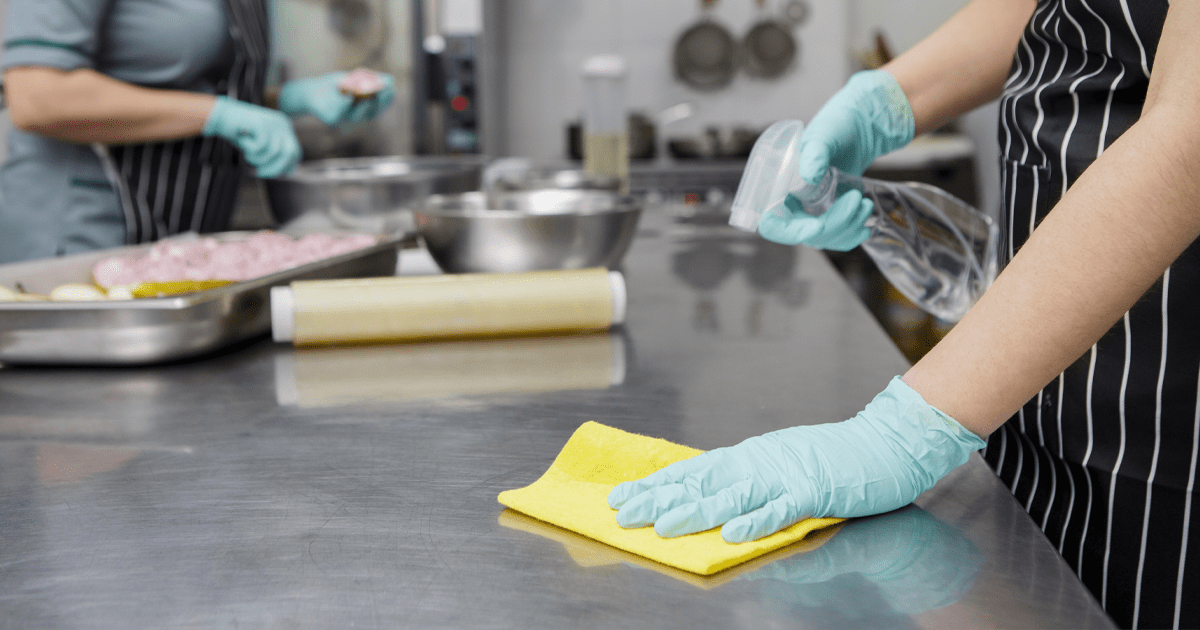
- Regularly clean and sanitize food contact surfaces, equipment, and utensils to prevent the spread of bacteria.
- Use a food thermometer to ensure food reaches the minimum safe internal temperature to prevent foodborne illness.
Illnesses also happen from workplace injuries, which are unfortunately extremely prevalent among kitchen staff. The Occupational Safety and Health Administration (OSHA) issued an alert for the food processing industry, reporting that serious preventable injuries were rising. Statistics from the National Safety Council in 2022 echo this, reporting over 9 million slip and fall accidents every year — one of the most common types of kitchen injuries.
This is where proper first aid knowledge comes in. Responding to common kitchen injuries, such as cuts, burns, and slips, makes a huge difference in preventing further harm and promoting recovery and can also help you and your staff:
- Identify potential hazards and take steps to avoid accidents
- Respond quickly and effectively in emergencies
- Provide appropriate care and treatment for injuries
- Reduce the risk of long-term damage or disability
Culinary Services Group Assists with Training Staff to Help Keep Your Community Safe
At this point, you’ve probably identified some areas for improvement in your safety plan. But before you get started on implementing changes, remember that a healthy kitchen begins with a well-trained staff. But who on your team is responsible for the training? And how do you record the training?
At Culinary Services Group, we take safety seriously. Regardless of the flexible contact model we agree on, you can rest assured that kitchen safety is at the foundation of all we do. Ongoing staff training, regular safety audits, and personalized guidance are only a few of the benefits of working with us to ensure that your senior living community’s kitchen operates at the highest level of safety and efficiency. When you’re a partner with us, you can focus on what matters most – the care of your resident. Let us help you realize your vision of serving delicious, nutritious meals and creating a positive dining experience for the residents in your community. We’d love to talk to you about our services. Schedule a consult to get started.