Last updated on June 15th, 2023
In recent years, the healthcare industry has created incentive programs to reduce hospital readmissions for senior patients. In 2015, one in every five Medicare patients was readmitted to the hospital within 30 days of their release. It’s believed that 12% of these readmissions could have been prevented, and preventing even 10% of these readmissions could mean a Medicare savings of $1 billion.
Today, value-based care (VBC) payment models reward senior living communities that focus on cost, outcomes, and quality of life rather than the number of residents.
If your community accepts Medicare beneficiaries, you are likely rewarded with quality care incentive payments through the Skilled Nursing Facility Value-Based Purchasing (SNF VBP) Program.
Under this program, SNF’s:
-
- Are evaluated by their performance on a hospital readmission measure;
- Are scored on both improvement and achievement;
- Receive quarterly confidential feedback reports containing information about their performance; and
- Earn incentive payments based on their performance.
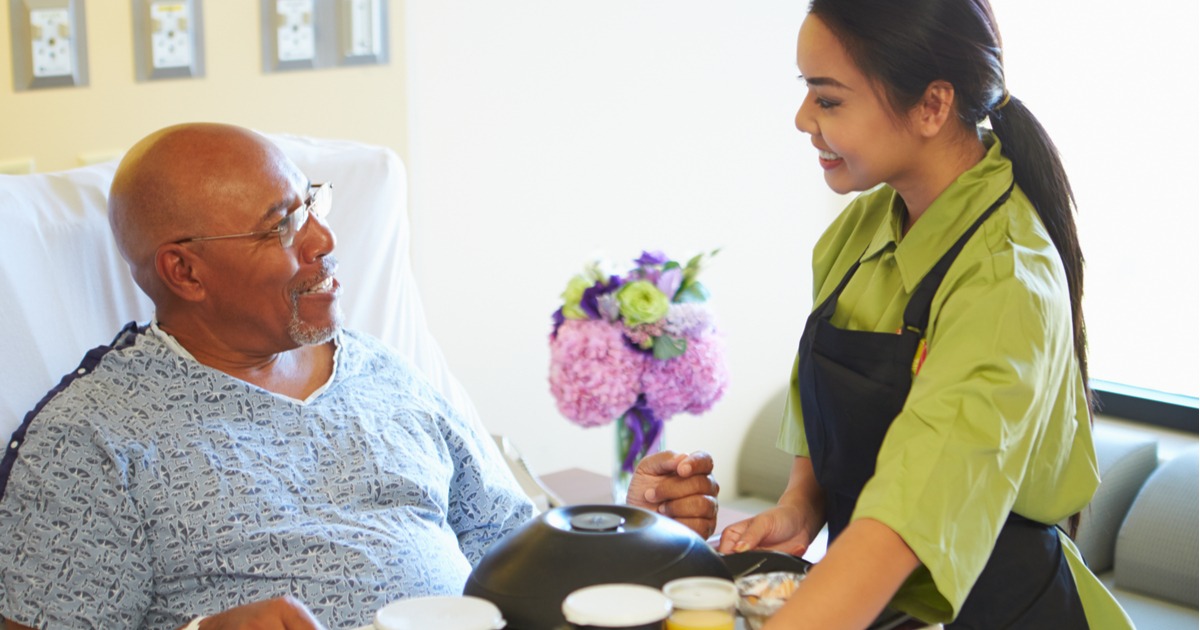
Your dining program can play a big role in a value-based care model. Nutrition is critical to preventing hospital readmissions, and it’s important to have a system in place to provide quality food service for residents returning from a hospital stay. A study by the Healthcare Cost and Utilization Project (HCUP) found that malnourished patients have a 50% higher readmission rate within 30 days than well-nourished patients.
Using Nutrition to Reduce Hospital Readmissions
Malnutrition is a common problem among seniors. Up to 50% of the hospitalized elderly population are malnourished, and about 16% of community-dwelling Americans older than 65 consume fewer than 1,000 calories per day. To combat malnutrition after a hospital stay, it’s essential to identify each resident’s nutritional needs by conducting individual nutrition screenings.
Develop a standard protocol for accurate weight and intake for new admissions and readmissions from the hospital. Nutrition assessments should also include:
-
- A dietary intake review for factors that affect health conditions and nutrition risk
- A health and disease condition evaluation for nutrition-related consequences
- A psychosocial, functional, and behavioral factor evaluation related to food access, selection, preparation, physical activity, and health condition
- An evaluation of the resident’s knowledge, readiness to learn, and potential for changing their behaviors
- Identification of standards to compare all data
- Identification of possible problem areas for making nutrition diagnoses
If you see any signs of malnutrition, work with your community’s registered dietitian to create an intervention plan. You should also be in communication with the resident’s hospital team to understand their current nutrition information, future nutritional needs that will aid in their transition, and any issues that might increase readmission risk.
Conduct nutritional reassessments regularly to evaluate the resident’s progress or understand if their nutritional needs have changed.
Focus on Person-Centered Care
Value-based programs emphasize person-centered care. Person-centered care puts the resident’s wants and needs first, not the staff’s. It means that residents are actively making decisions about their daily lives.
Your dining program can help you focus on person-centered care by providing food and dining experiences based on resident preferences to maximize food intake and improve quality of life. Liberalized diets are the person-centered care alternative to therapeutic diets. These diets aim to provide seniors with the food they like while still keeping them healthy. They avoid diet restrictions that may lead to poor appetite and decreased food intake.
We recommend meeting with residents to learn their food preferences so you can create a healthy, delicious diet for each person based on those. At Culinary Services Group communities, we sit down with each resident and learn their food likes and dislikes. Then, we use this information to develop a menu that takes those preferences into account.
Having a plan like this in place will help both SNFs and hospitals reduce their exposure to penalties related to readmissions and, more importantly, will provide better outcomes for residents.
From Your Community to Their Homes
Your dining team also needs to focus on preparing residents for their transition from your community to home, if applicable. The liberalized diet approach we mentioned above allows your team to educate your residents on healthy habits. Through your menus, you can teach residents about balanced diets, portion sizes, and making healthier choices overall so they can continue to do so once they’ve returned home. Your chefs can also host cooking classes to actually show residents how to prepare meals in their own kitchens.
Another way to help with this transition is teaching the resident how to grocery shop for their nutritional needs. Talk about budgeting, purchasing, and easy-to-cook meals, so they are prepared when they get home. We recommend going over this plan and nutritional needs with the resident’s doctor, caregiver, and/or loved ones. Make a point to check in with the resident regularly once they leave your community to ensure they aren’t having any issues with their nutrition plan.
Lower Readmissions, Improve Quality of Life, and Rebuild Your Census
Implementing these recommended improvements for residents that come to your community from hospitals will not only improve their quality of life it can also raise your census numbers.
Your dining program should not be an easily dismissed investment when considering the potential benefits and revenue gain it could bring. To learn more about how a few changes to your dining program could improve ROI, check out our new white paper below.


Culinary Services Group specializes in dining programs for healthcare settings. Our food-first approach to nutrition and wellness aligns well with your goal of lowering hospital readmissions. If you’d like to learn more about how we can help your community, contact us here.